
Fiber optic cable has transformed data exchange practices in modern communications.
Understanding within-building fiber deployments
Photonic cabling forms a central part of present-day networks.Internal deployment of fiber introduces specialized considerations and prospects.Successful optical cable installs demand full familiarity with system components and routing/termination standards.A key consideration is choosing the correct cable type for bandwidth needs and use case.Furthermore, trained installers should follow rigorous safety procedures to avoid fiber damage
- Meticulous project planning and precise execution ensure smooth indoor fiber installs
- Variables like structural layout, present cabling, and forthcoming bandwidth needs need attention.
- Appropriate termination practices are essential to preserve signal integrity and stable connections.
Uniting disconnected fiber optic cable communities
Outdoor fiber optic cables play a crucial role in narrowing the digital divide.Implementing high-speed fiber across remote communities ensures fair and reliable information access for all.This connectivity buildout is indispensable for encouraging economic growth, enriching education, and empowering communities online
Explaining Single-Mode and Multi-Mode Fiber Cables
Regarding long-range data transport, optical fiber leads the field.They exceed copper performance by supporting ultra-fast transmission and negligible loss.However, not all fiber cables are created equal.Single-mode and multi-mode fibers are the two main market segments.
Single-mode fiber conducts one light path through the core, consistent with its name.Accordingly, dispersion is limited, making it suitable for lengthy, low-attenuation transmissions.In contrast, multi-mode supports several modes simultaneously, providing increased throughput over shorter spans.These cables frequently serve local networks within buildings or campuses where distances are shorter.
- Hence, the decision between single- and multi-mode fiber is driven by specific use-case requirements.Single-mode is the recommended choice for long-distance, high-bandwidth needs.For limited-area, high-bandwidth requirements, multi-mode delivers a budget-friendly approach.

Fiber Cable Merits
Fiber optics have improved data transmission with a range of benefits.A top merit is their superior data-carrying capacity.Unlike traditional copper cables, fiber optics can transmit vast amounts of data over long distances with minimal signal loss.This high-speed transmission makes them ideal for applications requiring large data transfer rates, such as video streaming, online gaming, and cloud computing.Furthermore, fiber cabling is tough, resisting corrosion, harm, and EMI and environmental effects.Their resistance to interference protects signal integrity and supports reliable transmission in adverse settings.Furthermore, optical fiber enhances information security.Information over fiber is more secure and harder to intercept or tamper with.This security advantage positions fiber as the go-to for confidential uses like financial and government communications.
Advanced Fiber Solutions for Business Networks
Business networks require sturdy, dependable infrastructure for critical workloads.Fiber systems are favored for enterprises because of high bandwidth, low latency, and EMI immunity.Top-tier fiber offerings give businesses scalable, secure transport for data, voice, and video.These cutting-edge solutions leverage multimode, single-mode, duplex fiber optics to ensure high speeds, enabling businesses to meet the ever-growing demands of their operations.Installing fiber networks empowers businesses to increase performance, trim costs, and improve competitive standing.
- High-Performance Fiber Benefits:
- Exceptionally High Bandwidth Capacity
- Low-Latency Performance for Real-Time Workloads
- EMI-Resistant Transmission
- Scalable Infrastructure for Expansion
- Stronger Transmission Security
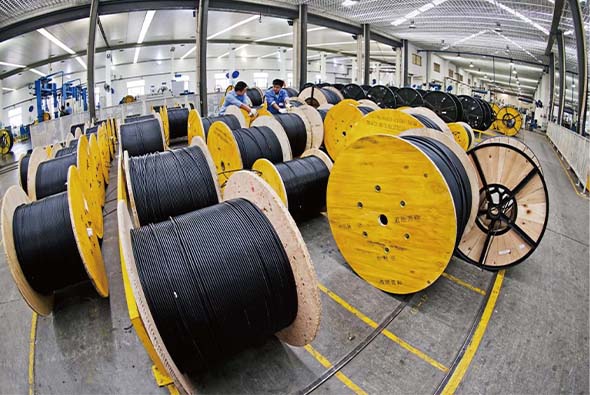
Protecting Investments in Fiber: Installation Advice
A comprehensive fiber installation plan is critical for infrastructure reliability.To maximize your investment, consider these best practices:Work with experienced fiber specialists to create a system meeting your specifications.Install high-quality, protected cables and components to minimize signal degradation and interference.Guarantee correct termination practices to preserve ideal transmission performance.Carry out periodic inspections and diagnostics to spot faults early.
Indoor vs Outdoor Fiber: Major Distinctions
Selecting the right optical cable is based on its planned application.Within-structure fiber is made for indoor setups offering high throughput and minimal loss.They generally feature lighter materials and enhanced flexibility for simpler indoor installation.In contrast, exterior fiber cabling is engineered for rugged outdoor conditions.These designs use tough jackets, UV-resistant sheathing, and rugged connectors for reliable operation in sun, rain, and temperature extremes.
Presented is a concise summary of the main distinctions:
- Material choice: Indoor variants favor lighter, less tough materials suitable for controlled environments, whereas outdoor types emphasize rugged, weatherproof constructions
- For indoor installs, procedures are commonly simpler and less specialized, whereas outdoor installs require ruggedized techniques and site preparation for exposure to elements
- Connector Types: Different connector types are common for indoor vs. outdoor cables, reflecting the specific application and environmental demands
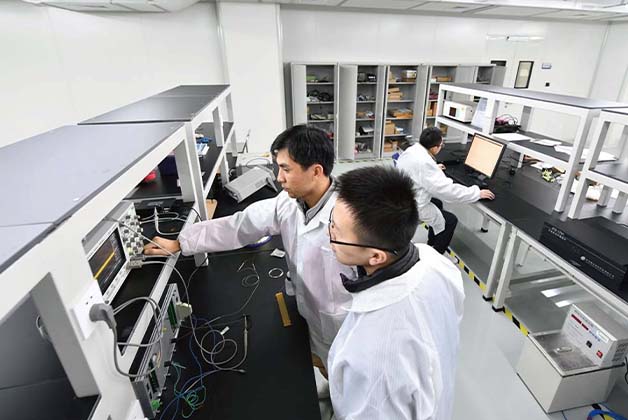
Optical Fiber Cable Specifications and Guidelines
The optical fiber sector depends on common standards and rules to guarantee interoperability and performance.These norms are produced by global organizations such as ISO and the IEEE.Essential standards relate to cabling construction, transmission profiles, connector formats, and testing procedures.Additionally, regulations aim to secure safety, reliability, and cross-vendor compatibility of fiber systems.
- Commercial adoption of standards is vital to facilitate effective design, make, and implementation of fiber networks.
- Compliance helps limit transmission issues and sustain peak data transfer rates.
Forthcoming Advances in Optical Fiber Tech
The fiber field is poised for change driven by escalating requirements for increased bandwidth, minimal latency, and more security.An important advancement is DWDM expansion, permitting huge numbers of signals on a single fiber to substantially raise network capacity.A further development is the implementation of advanced materials together with cutting-edge manufacturing methods.Investigators explore innovative fibers—high-performance glass, plastic optical fibers, and photonic crystal designs—to enhance bandwidth, reliability, and robustness.
In addition, researchers and engineers work on new fiber uses beyond usual telecommunications and data transfer.Applications include fiber-enabled sensing and detection for healthcare diagnostics, industrial monitoring, and precision agriculture.

Fiber optic technology is poised to play an even more central role in shaping the future of communications and beyond.With ongoing trend evolution, expect faster, more efficient, and higher-capacity networks, smarter connected devices, and transformative breakthroughs across industries.
Resolving Fiber Optic Faults
Fiber cables deliver high bandwidth and reliability but may still encounter faults.Adopting a stepwise diagnostic process is essential to identify causes of fiber faults.This resource details common signs and solutions to efficiently resolve fiber cable faults.
Start your inspection by assessing the physical integrity of the fiber cables.Probe for signs of damage, fraying, breaks, unsecured connectors, or sharp bends that interrupt transmission.
Operate a fiber power meter to measure optical levels at various test points on the link.Deviations from expected readings can indicate attenuation in the fiber, which may require replacement or repair.Inspect the connectors for contamination that can reduce signal transmission.Clean connectors with a specialized fiber optic cleaning kit to ensure a secure connection.
